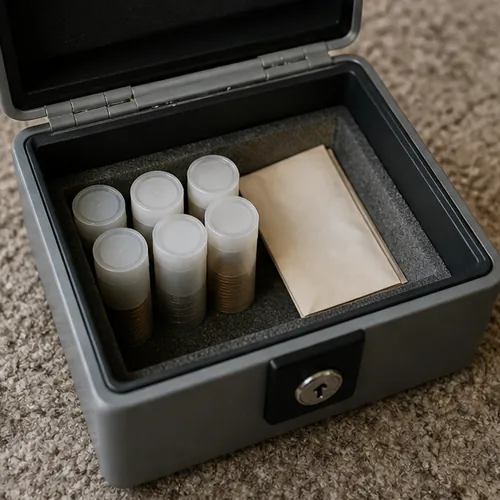
The plain-English guide to physical gold and silver: coins or bars, how much over spot is too much, how to spot a fake, where to store it and how it’s taxed, plus the 6 other ways people hold metals, explained side by side. No hype, no hot tips, no one selling you metal.
“I almost bought a ‘deal’ on silver that turned out to be 20% over what the coin was worth.”
“I had coins in my safe for 10 years and no idea what I paid or how to sell them.”
Spot price is what metal trades for in bulk. What you pay for one coin is spot plus a premium, and what a dealer pays you back is spot minus a spread. On small pieces that gap can be bigger than a year of price moves. Add shipping, card fees, fakes on marketplaces and the storage question, and most first-timers overpay on the first order. The guys who don’t simply had a checklist first.
“I read three forums and two dealer blogs and still couldn’t tell you what a fair premium was.”
A first-time buyer from Ohio
A troy ounce is 31.103 grams, the standard unit for precious metals. Premiums and spreads change with the product, dealer and market conditions. This guide is educational and is not financial advice.
None of this is a money problem. It’s a checklist problem, and this guide hands you the checklist ready.
A lot of men set one money goal for the new year and never get past the research tab. Read the guide this week and you’ll know what you’d buy, from whom, at what premium and where it goes.
Enough time to read the 8 chapters, run the dealer checklist and set up your storage plan, whether you buy one coin or decide to wait.
The same three steps for your first silver coin or your tenth gold bar.
Coins, bars, rounds, an ETF or none of the above. The comparison tables show the cost, the resale and the risk of each one side by side.
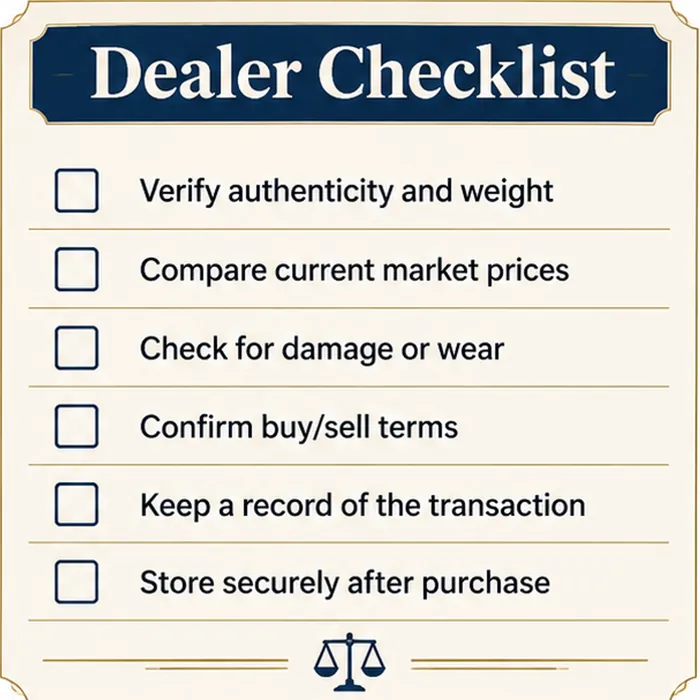
Run the dealer checklist and the premium calculator. You see what you pay over spot and what a dealer would pay you back before you click.
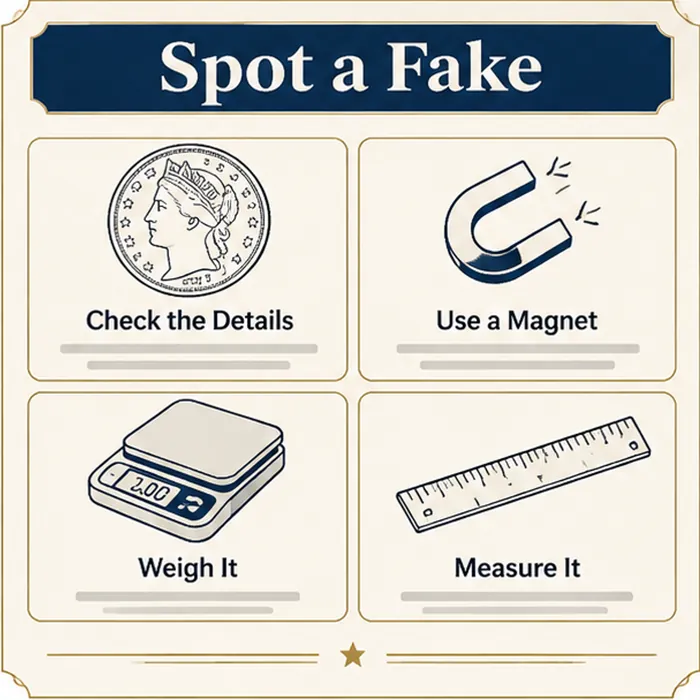
Weigh it, measure it, ring it. Then pick home, bank box or depository with the storage planner, and write it down for your family.
Each one is in the guide, step by step, with the checklist or the sheet to do it. These are the questions every first-time buyer asks.
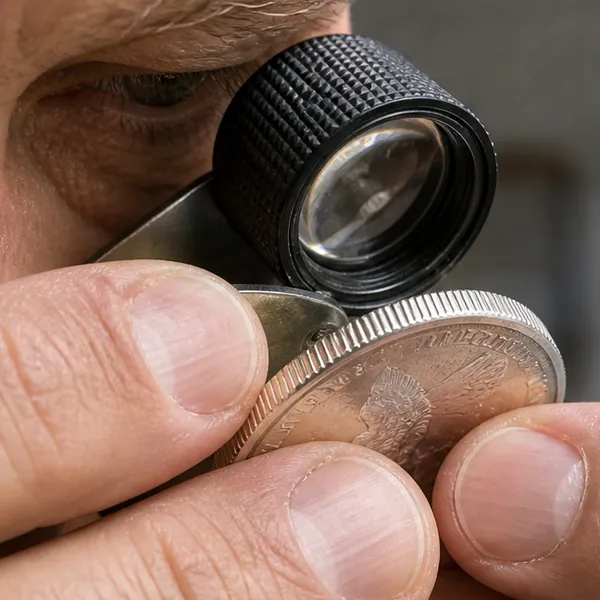
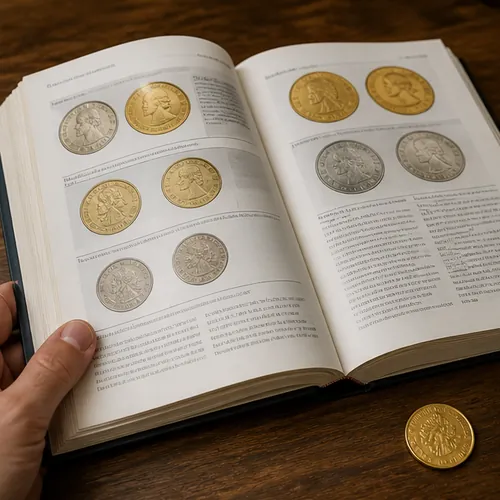
Read a coin up closeMint marks, purity, condition
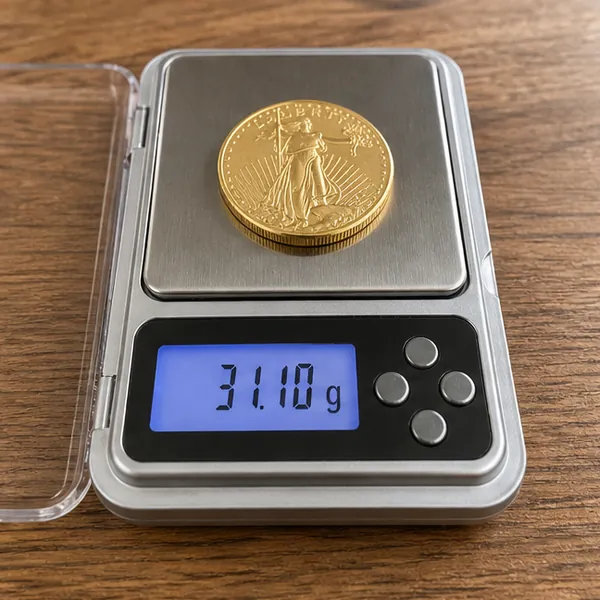
Weigh it in troy ouncesAnd why 1 oz is 31.1 g
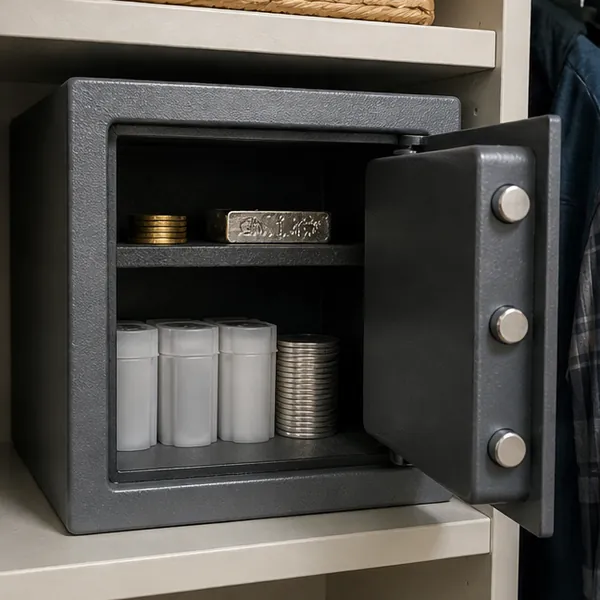
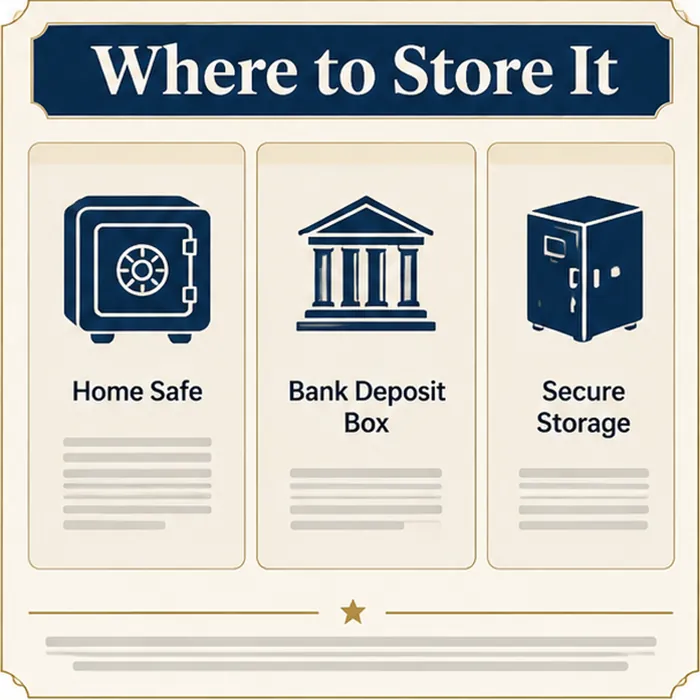
Store it at home, the right waySafe, hiding spot, insurance
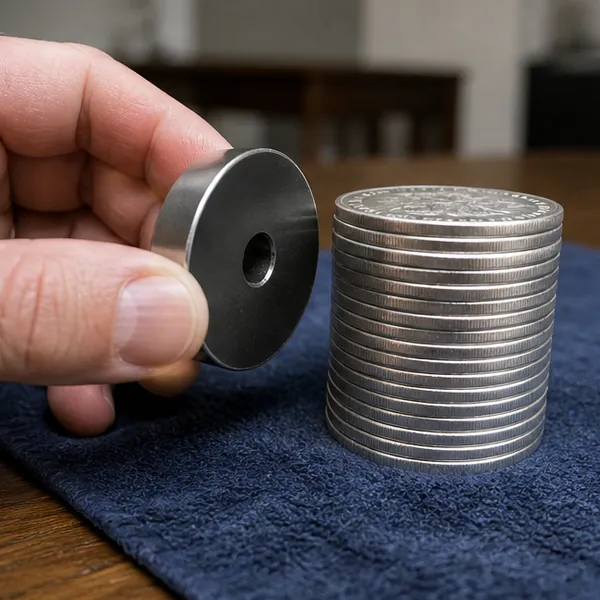
Run the magnet testAnd the 4 other home tests
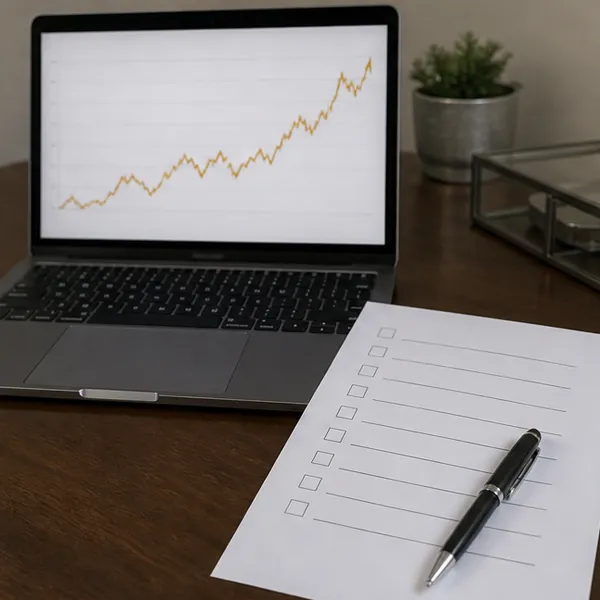
Read spot and premiumThe real cost per ounce
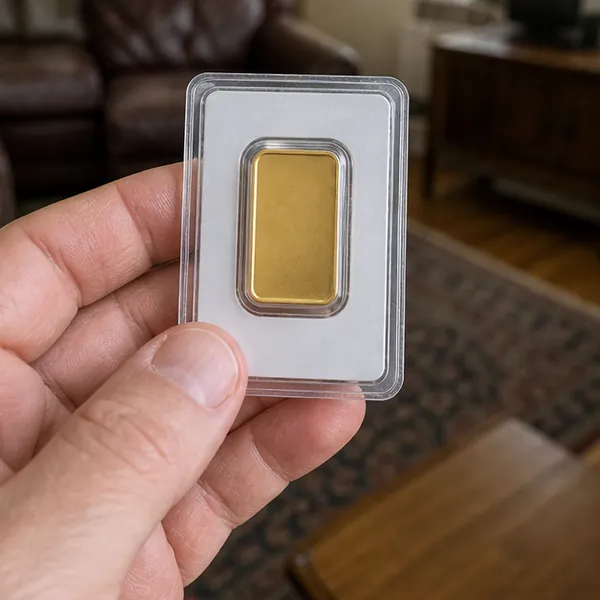
Know what a bar card meansAssay cards and serial numbersExamples of what the guide covers. It does not recommend any product, dealer or amount. Metal prices go up and down and you can lose money.

Your first ounceYou’ve never bought metal before. You want to know what to buy, where, and what a fair price looks like, without a salesman in your ear.
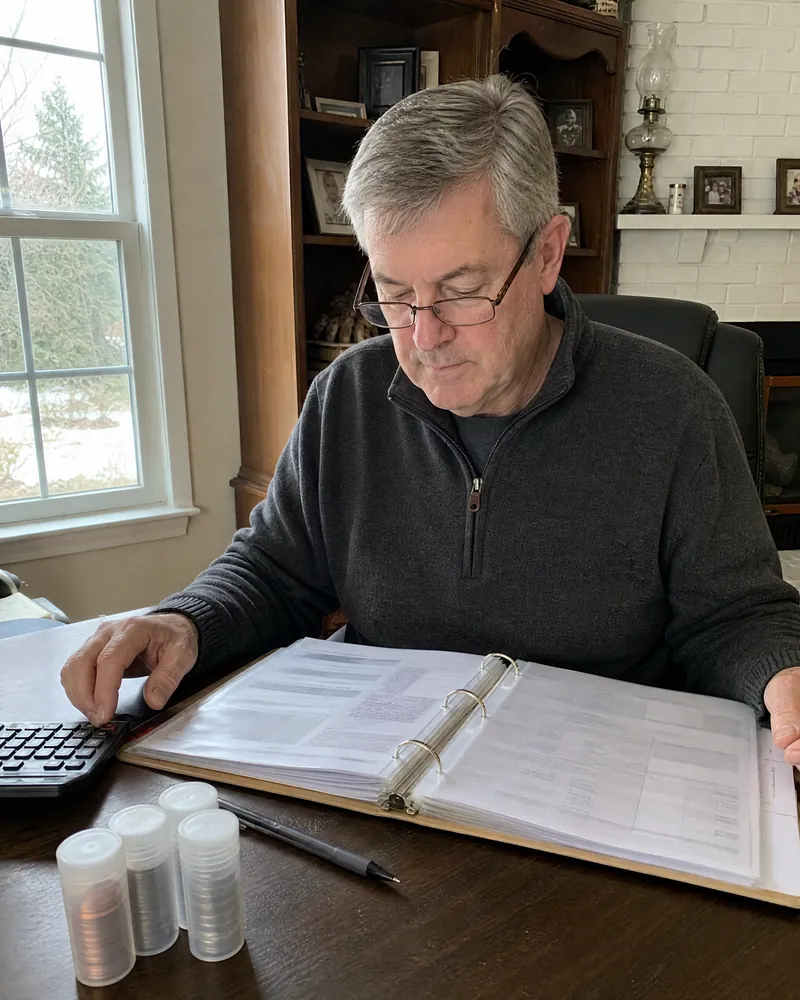
A real planPhysical, certificates, ETFs, futures, mining stocks, digital gold and IRAs, explained with their costs and risks, so the choice is yours and nobody else’s.
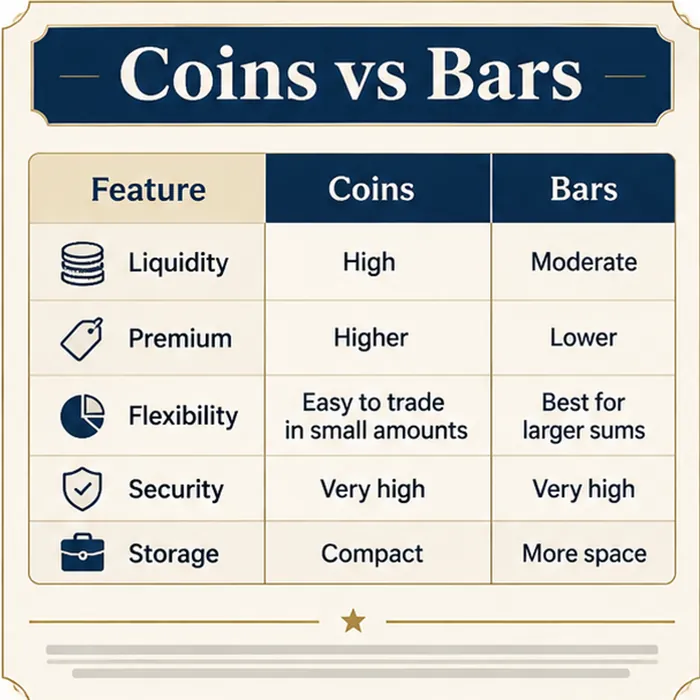
These are the kinds of pages inside: coins vs bars, the dealer checklist, the fake tests and the storage options. Every one fits on a page you can print and keep by the safe.
Read the guide, run the checklist and fill in the calculator. If it isn’t for you, send one email within 7 days and we’ll refund you in full. No forms, no questions.
Regular guys who wanted to stop guessing before they spent a dollar.
Mike ›
Dave ›
Uncle Ray ›

Read the intro and Chapter 1. You’ll know the difference between coins, bars and rounds, and why the premium matters more than the spot price on the first purchase.
Chapters 2 to 6: certificates, ETFs, futures, mining stocks and digital gold, each with what it costs, what can go wrong and who it fits. Then decide what fits you.
Pick a coin you’d buy, plug two dealer quotes into the premium calculator and run the checklist. Print the Spot-a-Fake Field Card for when it arrives.
Open the Storage & Insurance Planner and fill in the Family Hand-Off Sheet. Your plan is on paper, and you decide if and when to buy.
That’s it. One week, and the next time someone says “you should buy gold”, you know exactly which questions to ask first.
From the first coin you hold to the sheet your family keeps, in plain English.
Purity, sizes, government coins vs private rounds, what sells back easily and what doesn’t, and why the smallest pieces carry the biggest premiums. The chapter to read before your first order.

A one-page checklist for any dealer, online or local, and a Google Sheets calculator that turns two quotes into a real cost per ounce, so you compare apples to apples.

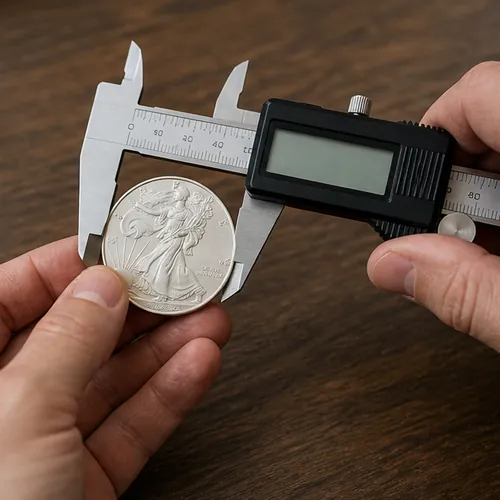
Five simple tests you can do at the kitchen table with a pocket scale, a caliper and a magnet, with the specs of the most common coins. And when to take it to a pro instead.

What each one is, what it costs to hold, what you actually own and what can go wrong, in one table per option. No recommendations, just the facts to compare.

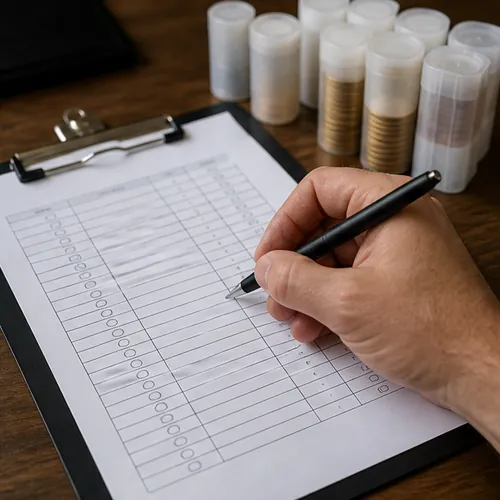
The costs and trade-offs of every storage option, the questions to ask your insurer, and the one sheet that tells your family what you have and where if they ever need it.

How metals IRAs and custodians work, how the IRS generally treats metals, the pitches to walk away from, what to say to a dealer, and a tracker for what you paid. Bring it to your CPA.

What men say once they stop guessing about metals.
“I kept a dealer tab open for two years and never clicked buy because I didn’t trust the numbers. I read the first chapter on a Sunday and ran two quotes through the calculator. Bought five silver coins the next week and knew exactly what I paid over spot.”
“A marketplace seller had 1 oz gold bars listed way under spot, with free shipping. I almost sent the money. The red flags playbook described that exact listing almost word for word. I passed, bought from a dealer on the checklist instead, and a month later that seller’s page was gone.”
“I had coins in a gun safe for ten years, no receipts and no plan. I used the inventory tracker and the family sheet over two evenings. My son finally knows what’s in there, what it cost and who to call, and so does my wife.”
“A guy on the phone wanted me to roll my 401(k) into a metals IRA with a free safe. Chapter 7 gave me the questions to ask about fees and markups. He couldn’t answer two of them. I said no and I’m taking my time to decide on my own.”
No. This is an educational guide. It explains how physical gold and silver and the other options work, what they cost and what can go wrong. It doesn’t tell you what to buy, when, or how much. For decisions about your money, talk to a licensed financial advisor or a CPA.
Nobody can promise that, and we don’t. Metal prices go up and down, sometimes a lot, and you can lose money. The guide helps you understand what you’re buying and avoid overpaying or getting scammed, not predict prices.
No. We don’t sell metals, we don’t get paid by any dealer and there are no affiliate links in the guide. That’s the point: nobody is selling you anything once you’re inside.
Yes. It starts from zero: what a troy ounce is, what spot price means and what to check before your first purchase. If you already own some, the storage, tax and family chapters are where most guys find gaps.
The guide doesn’t require you to buy anything. Many people start with a single silver coin. Chapter 1 explains why small pieces cost more per ounce and how to think about that, so you can decide for yourself.
Yes. Chapter 7 explains how they work, the custodian and storage rules, the fees to ask about and the red flags in the sales calls. It’s general information, not tax or legal advice.
Chapter 8 explains in plain English how the IRS generally treats gold and silver, why records of what you paid matter, and what to bring to your CPA. Tax rules change and depend on your situation, so always confirm with a tax professional.
A digital guide (PDF) you can read on your phone, tablet or computer and print, plus the Google Sheets calculator and tracker. Nothing is shipped.
Right after you pay, you get an email to open your library. Everything is there, ready to read and print.
For life, including updates to this edition.
Yes. Checkout is secure, access arrives by email the moment you pay, and you’re covered for 7 days.
Your purchase is covered for 7 days. Read it, run the checklist, and if it isn’t for you, send us one email and we’ll refund you in full.